
The Choice Is Easy, Really
Look, it’s simple. The Shinkansen is a bit more expensive, but not by much, and the trade-offs are worth it. If you’ve never been on it before, it’s something special. Scenic views. A smoother ride. Quicker overall. And you’re not wedged into a cramped seat with kids climbing over you.
Looking for the best eSIM for travel? Click here to buy an eSIM instantly
The bullet train is famously punctual. Like, refunds-if-it’s-a-minute-late punctual. There are documented cases of passengers getting apologies and partial refunds for delays of 60 seconds. It’s just part of what makes Japan, Japan.
If you’re coming here, this isn’t just transport. It’s the experience.
Our Family Journey: Why We Chose the Shinkansen
We travelled from Osaka to Fukuoka with our two kids. We had the option to fly, and usually, we’d go with whatever’s cheapest. Every penny and all that. But this time? It didn’t feel like wasted money.
It was only about £45 more expensive, and for that, we got no airport nonsense. No check-in queues. No baggage limits. We turned up ten minutes before departure, strolled onto the platform, and were in our seats before most people would have even cleared security at an airport.
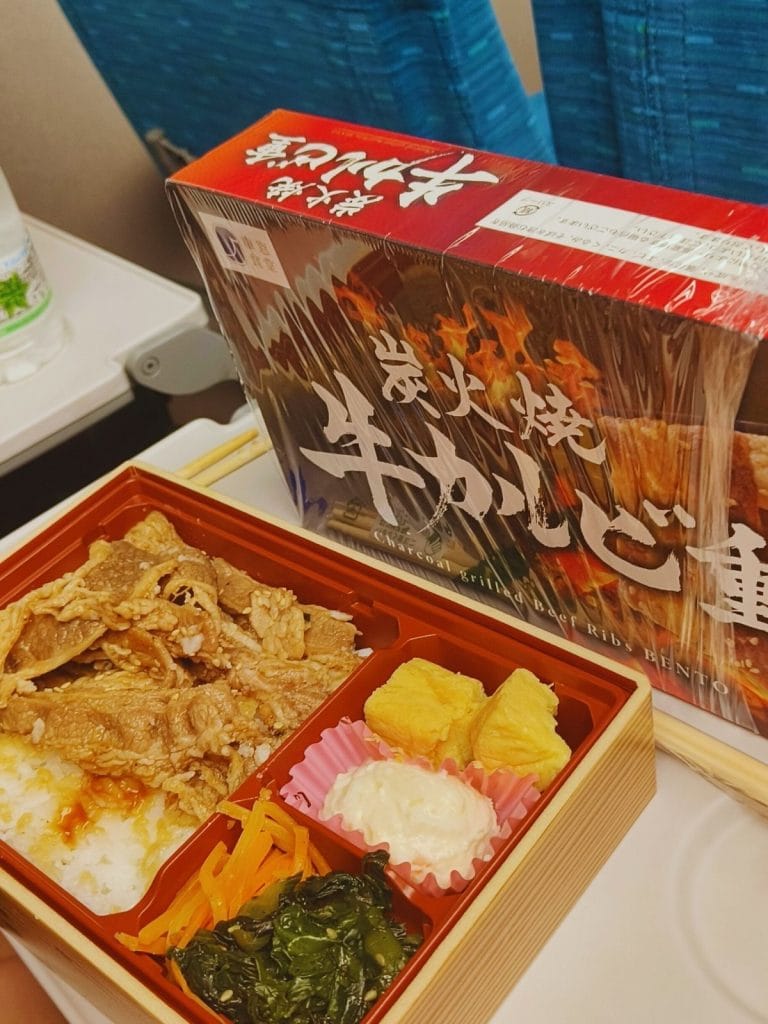
It’s pretty much mandatory when travelling long distances with kids to ensure alcohol is involved somewhere. We grabbed a couple of chu-hi lemon drinks from the station (totally normal here), some bento boxes, and settled in. The seats were big. The carriage was quiet. The views were lovely. And yes, you can bring suitcases, just book the right carriage.
Being able to move around, eat, and not wrestle bags or tired children through a departure lounge made a massive difference.
Shinkansen vs Flying: Real Cost Comparison (Family of Four)
Shinkansen (Nozomi) | Budget Airline (e.g. Peach/Jetstar) | |
|---|---|---|
Total Cost | ¥52,000 (£260 / $330) | ¥45,000 (£225 / $285) |
Time (door-to-door) | 2.5 hrs | 3.5–4 hrs (including transit and security) |
Luggage | No limit. Bring what you want. | Limits and likely extra fees. |
Comfort | Spacious, quiet, easy to move | Cramped, noisy, can’t move around |
Food/Drink | Buy bento, drinks, even alcohol | Pay extra for snacks |
Experience | Scenic, peaceful, iconic | Just another flight |
How to Book and What Seats to Choose If You Have Luggage
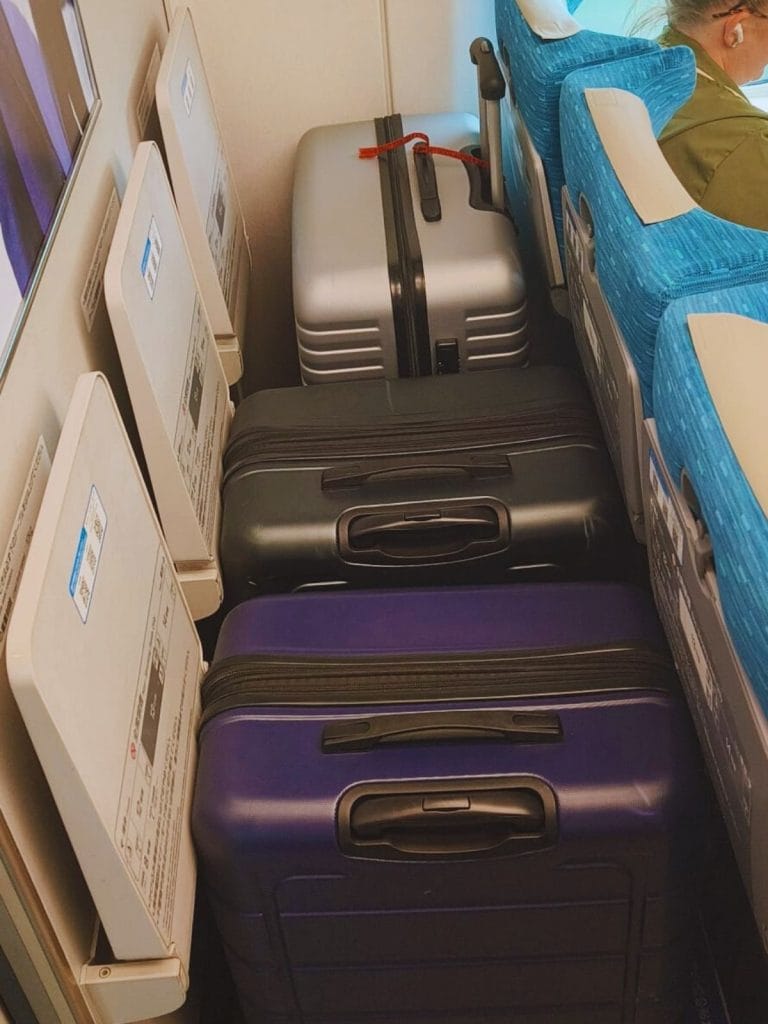
If you’ve got big bags, be smart about your seats. Some Shinkansen carriages have oversized luggage space, but only specific ones. And it’s limited.
This is where Klook is a lifesaver. Booking direct through Japanese sites is confusing unless you read Japanese or know the system well. Klook? Way easier. It tells you:
- Which carriages allow large luggage
- Where the oversized baggage spots are
If you’ve got bulk or awkward bags, just book through Klook and pick the right carriage. Simple. And if you don’t even want to deal with luggage, you can use a delivery service — which is what many locals do.
If you’re in one of the designated luggage carriages, there’s a clearly marked area at the back of the carriage where large suitcases can be stored. You can also keep smaller bags overhead or between seat rows, but the space at the back is specifically designed for bigger cases. It’s best to board promptly and head straight there to claim your spot
Check prices and availability here
Location Matters: Station vs Airport Access
Getting to a train station is generally much easier than getting to an airport in Japan. Stations are usually in the centre of town, walkable, and well-connected. Airports? Not so much. Add in the need to arrive early, clear security, deal with check-in lines, and you’re losing hours before you even take off. It’s just harder especially with kids.
![Shinkansen toilet with modern urinal and compact sink setup, photographed during high-speed travel between Osaka and Fukuoka]](https://wingingitworldwide.com/wp-content/uploads/2025/06/Shinkansen-Urinal-768x1024.jpg)
And where else can you use a urinal at 200mph?
Final Verdict
The Shinkansen isn’t just a way to get from A to B. It’s the trip. If you’ve never done it, do it. Especially with kids.
We’d do it again without thinking twice. In a country where everything runs to the second and even the train toilets feel space-age, this is one ride you’ll remember.
If you’re planning a trip to or from Osaka, we’ve got a full family itinerary that breaks it all down from hidden playgrounds to budget-friendly eats that still taste amazing. Whether you’re arriving by Shinkansen or heading out, it’s packed with real tips from the ground. Click here to have a look, it’ll save you time and probably a bit of money too.




2 Comments
Comments are closed.